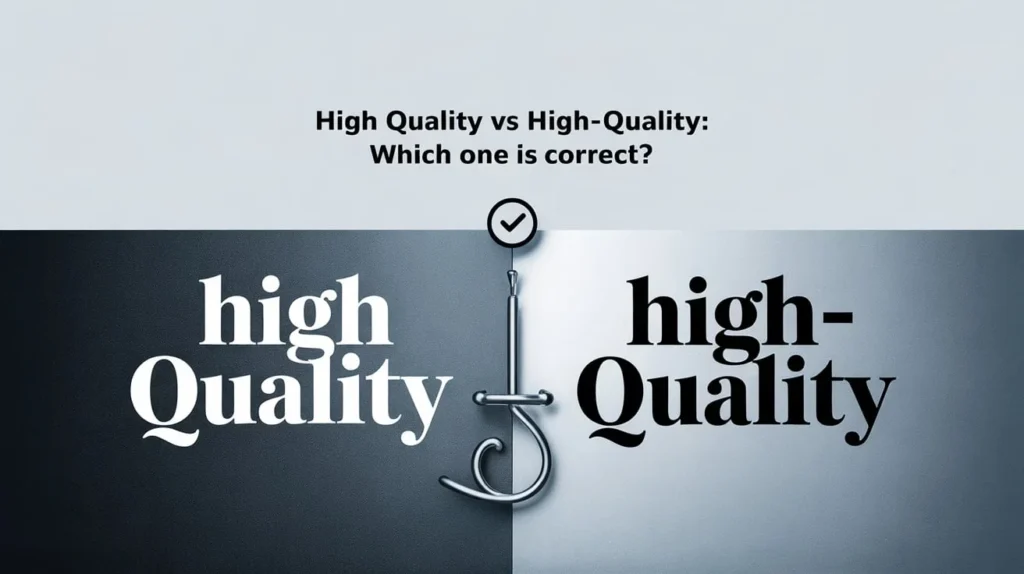
When it comes to language, some distinctions are more subtle than others, and the debate over whether to use “high quality” vs “high-quality” is one of those. While both terms seem interchangeable, they aren’t quite the same grammatically, and using them correctly can enhance the clarity of your writing. If you’ve found yourself wondering which one to choose, you’re not alone. Many people make this mistake every day without realizing it. But don’t worry, by the end of this article, you’ll have a clear understanding of when and how to use each term.
Understanding the difference between “high quality” and “high-quality” can have a significant impact on your writing, whether you’re crafting a business email, a marketing piece, or even a personal blog. In this article, we’ll explore the meanings of these terms, dive into grammar rules, and provide you with clear, actionable guidelines for using them correctly. Additionally, we’ll examine the nuances of their usage, offer plenty of examples, and even explore synonyms that can help diversify your language without losing precision.
So, let’s get into it: Is it “high quality” or “high-quality”? Here’s everything you need to know.
Why is There Confusion Between “High Quality” and “High-Quality”?
At first glance, “high quality” and “high-quality” appear to be the same, but the distinction lies in grammar and usage. The confusion typically arises from the role of the hyphen. In English, the hyphen is often used to link words together to form compound adjectives or nouns. However, the rules around hyphenation aren’t always clear, especially when it comes to descriptive terms like “high quality.”
For example, “high-quality” with a hyphen often functions as an adjective, while “high quality” without the hyphen is more commonly used as a noun phrase. This subtle difference can trip up even seasoned writers. Understanding this can help eliminate confusion and improve your writing.
What Does “High Quality” Mean?
“High quality” is a noun phrase that refers to a standard of excellence or a measure of superiority. It typically describes the level of excellence of something, whether it’s a product, service, or experience.
Examples of “High Quality” in Context:
- The high quality of their customer service sets them apart from competitors.
- Consumers are increasingly seeking high quality in the products they buy.
- The high quality of this research paper was evident in its detailed analysis.
In these examples, “high quality” is used as a noun phrase to refer to an elevated standard of something. It’s not directly modifying a noun but instead refers to the overall excellence of the subject.
What Does “High-Quality” Mean?
In contrast, “high-quality” with the hyphen serves as an adjective. It describes something that is of superior quality. In this case, the hyphen is used to join the words “high” and “quality,” turning the phrase into a single adjective that modifies a noun.
Examples of “High-Quality” in Context:
- This is a high-quality product that lasts for years.
- They provide high-quality content to their subscribers.
- I only buy high-quality leather for my handbags.
Here, “high-quality” is used to describe the noun (product, content, leather), indicating that these things are of superior quality.
“High Quality” vs “High-Quality”: What’s the Difference?

The key difference between “high quality” and “high-quality” lies in the role they play in a sentence:
- High Quality (noun phrase): Refers to a standard or level of excellence.
- High-Quality (adjective): Describes a noun by indicating that it has superior quality.
Understanding when to use each is crucial for clarity. Let’s take a closer look at when to use each form.
| Term | Role | Example |
| High Quality | Noun phrase | “The high quality of the service is evident.” |
| High-Quality | Adjective | “It is a high-quality service.” |
When to Use “High Quality”
You should use “high quality” when referring to the overall standard or level of excellence, especially when it’s used as a noun phrase. This typically applies when discussing something abstract like the quality of a service, research, or product, not when directly describing something.
Correct Usage Examples:
- The high quality of the material ensures durability.
- High quality in customer service is essential for brand loyalty.
- The research was noted for its high quality.
These examples illustrate the use of “high quality” when referring to an overall standard, not a specific adjective describing an individual noun.
When to Use “High-Quality”
You should use “high-quality” with a hyphen when it functions as an adjective directly modifying a noun. It describes something with superior characteristics and is used when you want to emphasize the quality of the specific noun you’re discussing.
Correct Usage Examples:
- She owns a high-quality camera for her photography business.
- They offer high-quality courses that prepare you for the job market.
- This high-quality fabric is perfect for tailoring.
Notice how the hyphenated “high-quality” directly modifies the noun in each case, making it an adjective.
The Key Difference Between “High Quality” and “High-Quality”
At this point, it’s clear that the hyphen plays a critical role in defining how these terms are used. Here’s a quick recap of the primary difference:
- High Quality (Noun Phrase): Refers to an overall standard or level of excellence.
- High-Quality (Adjective): Describes a noun, indicating that the noun possesses superior quality.
To help reinforce this, here’s a simple comparison table:
| Term | Use | Example |
| High Quality | Noun phrase | “The high quality of the presentation was noted by all attendees.” |
| High-Quality | Adjective | “The company uses high-quality materials for its products.” |
Synonyms for “High Quality” and “High-Quality”
Both “high quality” and “high-quality” have numerous synonyms, allowing you to vary your language and avoid repetition. Here’s a closer look at some options for each.
Synonyms for “High Quality” (Noun Phrase)
When referring to the level of excellence, you can use various synonyms to express the same idea.
Possible Alternatives:
- Top-notch
- Premium quality
- First-rate
- Exceptional quality
- Superior standard
- Elite quality
Example Sentences:
- The top-notch craftsmanship of the furniture was impressive.
- They’ve always prided themselves on offering premium quality products.
Synonyms for “High-Quality” (Adjective)
When describing something with superior attributes, here are some synonym options:
Possible Alternatives:
- First-class
- Outstanding
- Exceptional
- Superior
- Exquisite
- Premium
Example Sentences:
- This is a first-class restaurant known for its exceptional service.
- The restaurant offers superior quality dishes.
Examples in Context
Here are some practical examples to illustrate both “high quality” and “high-quality” in real-world scenarios.
Examples of “High Quality” (Noun Phrase):
- The high quality of the company’s products is why they have so many repeat customers.
- This university’s research is known for its high quality.
- The high quality of his work earned him numerous accolades.
Examples of “High-Quality” (Adjective):
- They sell high-quality smartphones that are durable and efficient.
- She is a high-quality leader who motivates her team to exceed expectations.
- The team provided high-quality results in record time.
Origins of “High Quality” and “High-Quality”
The use of “high quality” and “high-quality” has evolved over time, with the shift in language rules and the development of compound adjectives contributing to the confusion. The hyphenation trend in English grammar is relatively modern, evolving from older practices of combining multiple words to form a single idea.
Historically, both forms were used in similar contexts, but as language rules became more formalized, hyphenated adjectives became more common in certain situations, like in product descriptions and advertising.
Final Thoughts: When to Choose “High Quality” vs “High-Quality”
In conclusion, understanding when to use “high quality” and when to use “high-quality” can significantly improve the clarity of your writing. Remember:
- Use high quality when referring to the overall standard of excellence (noun phrase).
- Use high-quality when describing a noun with superior characteristics (adjective).
By keeping these distinctions in mind, you’ll be able to communicate more clearly and accurately, whether you’re writing an article, crafting marketing materials, or composing an email. It’s a small detail, but mastering it will enhance your credibility and ensure that your writing is precise and professional.
Conclusion
Choosing between “high quality” and “high-quality” may seem trivial, but the small difference can make a big impact on how your writing is perceived. By understanding the rules behind these terms and knowing when to use them, you’ll improve both your grammar and your overall communication.
Next time you’re writing, remember the difference and be mindful of the hyphen. It’s a simple way to elevate your writing and make sure it’s both accurate and professional. Happy writing!

Emma Brooke is a passionate English educator, writer, and language enthusiast with over a decade of experience helping learners master the nuances of the English language. At SynoEnglish, she blends practical grammar advice with real-world communication tips to make English easier, clearer, and more enjoyable for readers of all levels.


